How Do I Personalize a Football Jersey? A Complete Guide to Custom Football Jerseys
May 27, 2026 8 min read


Most People Skip the First Step — and That's Why Their Jersey Ends Up Wrong
There's a version of this story that plays out constantly: someone orders a custom jersey, it looks great in the mockup, and then it shows up and something is just... off. The number font is hard to read from ten yards away. The fabric is stiff. The fit makes it impossible to run properly. None of these problems are hard to avoid, but they all happen because people jump straight to picking colors without thinking through what the jersey actually needs to do.
Custom football jerseys are not complicated to order. But there are about six decisions between "I want a custom jersey" and "this is exactly what I wanted" — and getting each one right is what separates a jersey you wear every game from one that hangs in a closet after the first practice.
This guide walks through all of them.
Step One: Get Clear on What You're Actually Making
Before you touch a design tool or pick a color, you need to know what category of use you're building for. This sounds obvious, but it's where most ordering mistakes start.
School and organized league jerseys have requirements that recreational jerseys don't. Number legibility standards, prohibited color combinations (in some leagues), specific sizing norms for different positions — these aren't suggestions. If you're ordering for a school team or any sanctioned league, pull the rulebook before you start designing.
Custom flag football jerseys are a different animal altogether. Flag football is a non-contact format, which changes the physics of how a jersey needs to fit. You need clearance around the hips and waist so flags sit and release properly. A fitted jersey that works perfectly for tackle football becomes a liability in flag — defenders can grab it to pull a flag, and a tight cut makes that easier. Purpose-built custom flag football jerseys account for this with a slightly longer, looser cut through the torso. It's a small difference on paper and a significant one in a game.
Recreational and display jerseys have the most creative freedom. If you're making something for a youth group, a charity tournament, a family reunion, or just a personal piece, the structural requirements drop away, and you can focus entirely on aesthetics.
Knowing which category you're in takes about thirty seconds and saves you from the most common ordering mistake of all: making a great-looking jersey that doesn't work for the sport you're playing.
Step Two: Design — Where the Real Decisions Live
This is the part people spend the most time on, and for good reason. A well-designed jersey tells a story. A poorly designed one just looks busy.
Color Comes First
The professional standard for jersey design is two to three colors, with one clearly dominant. More than three colors, and the design starts competing with itself. This isn't a strict rule — there are legitimate four-color designs that work beautifully — but it's a useful constraint when you're starting out.
Some pairings that hold up well in athletic contexts:
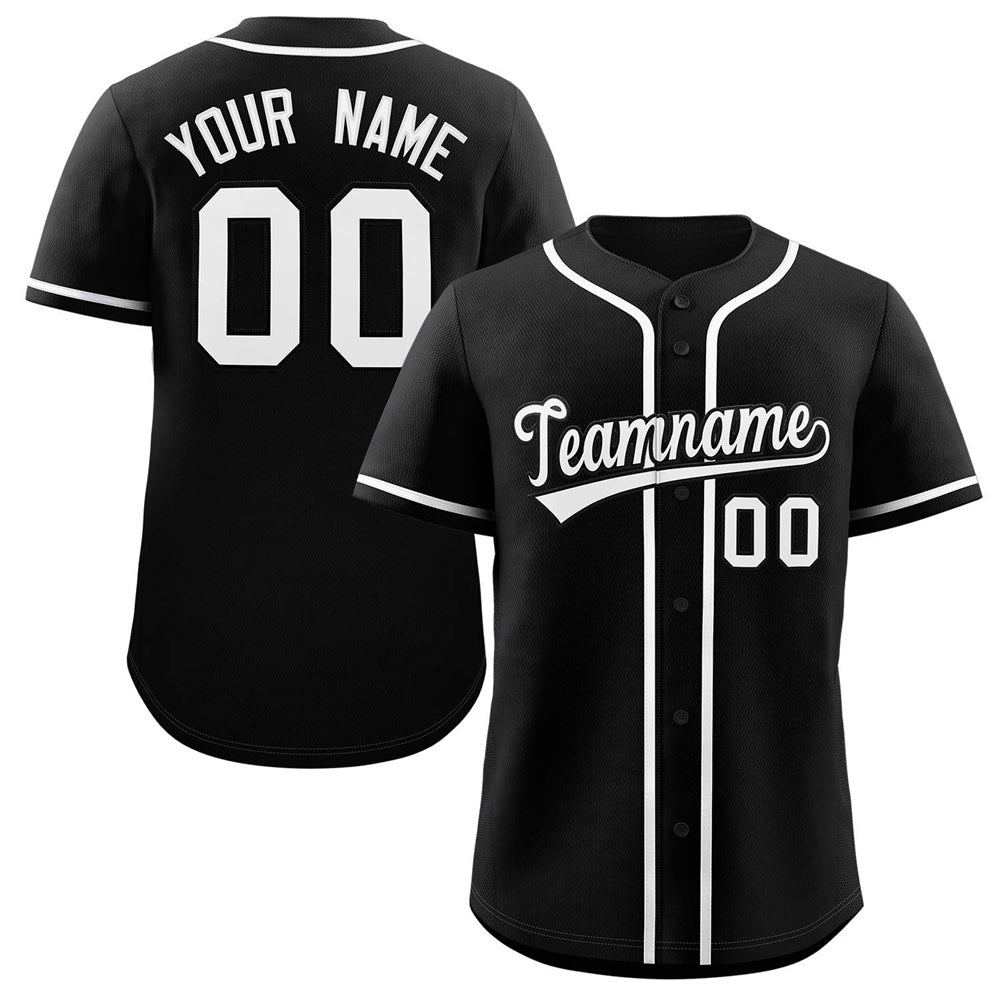
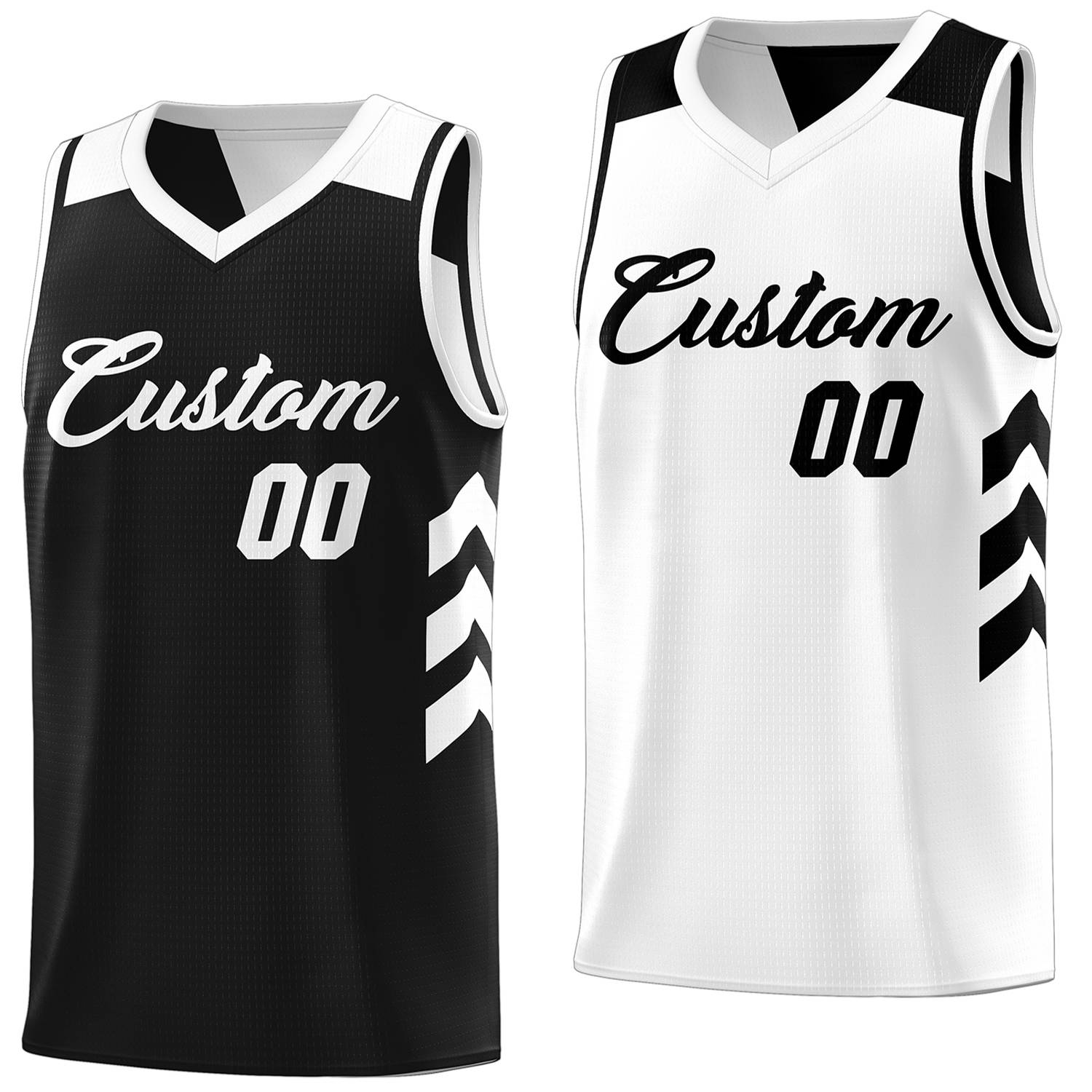
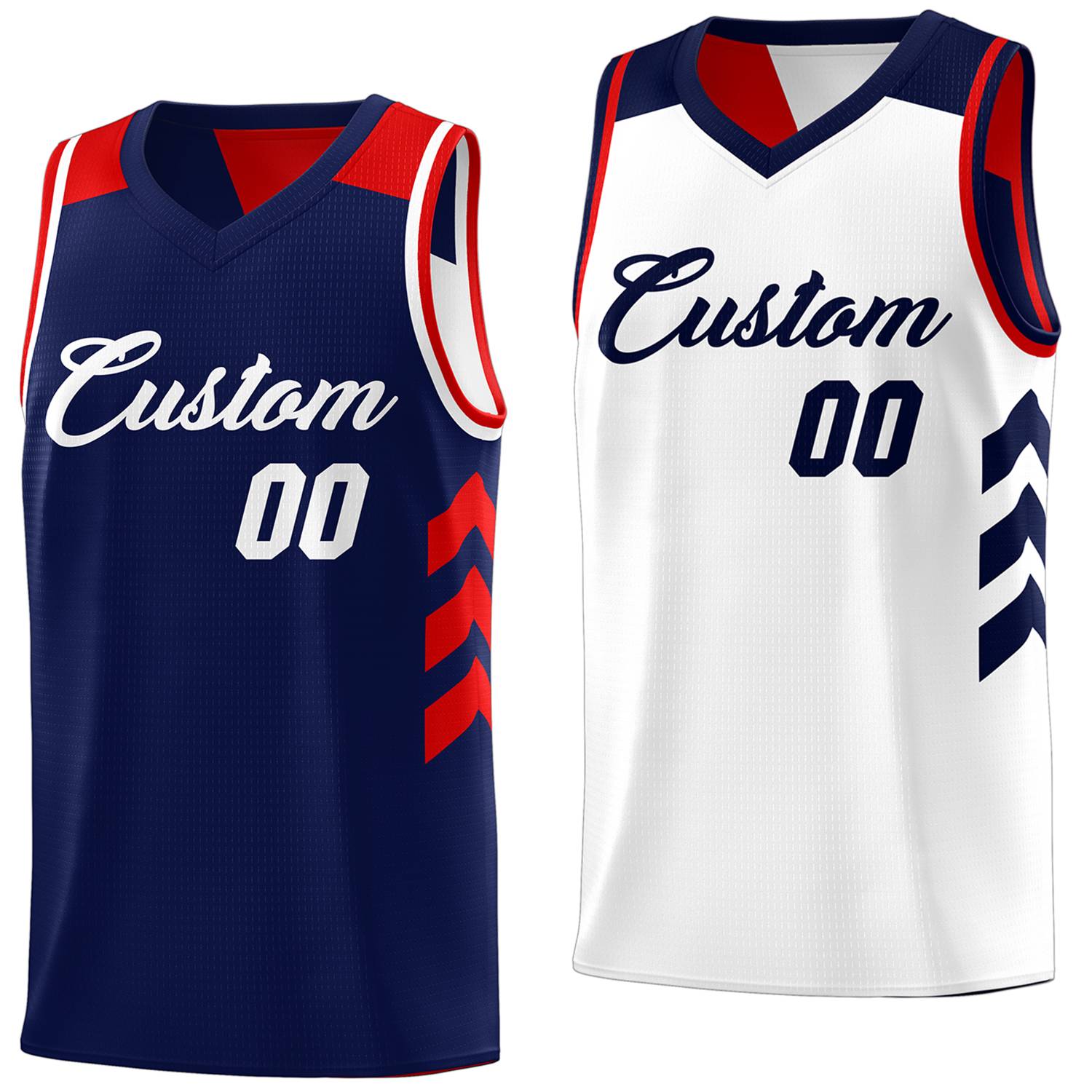
· Navy + gold + white — traditional, authoritative, reads clearly from a distance
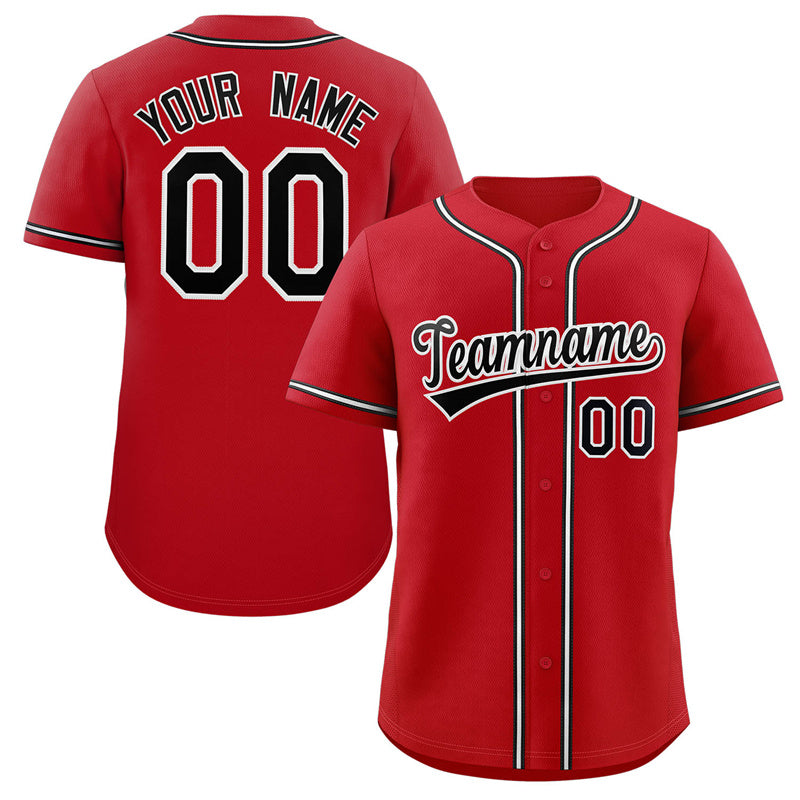
· Black + red + white — high contrast, aggressive, works well for bold typography
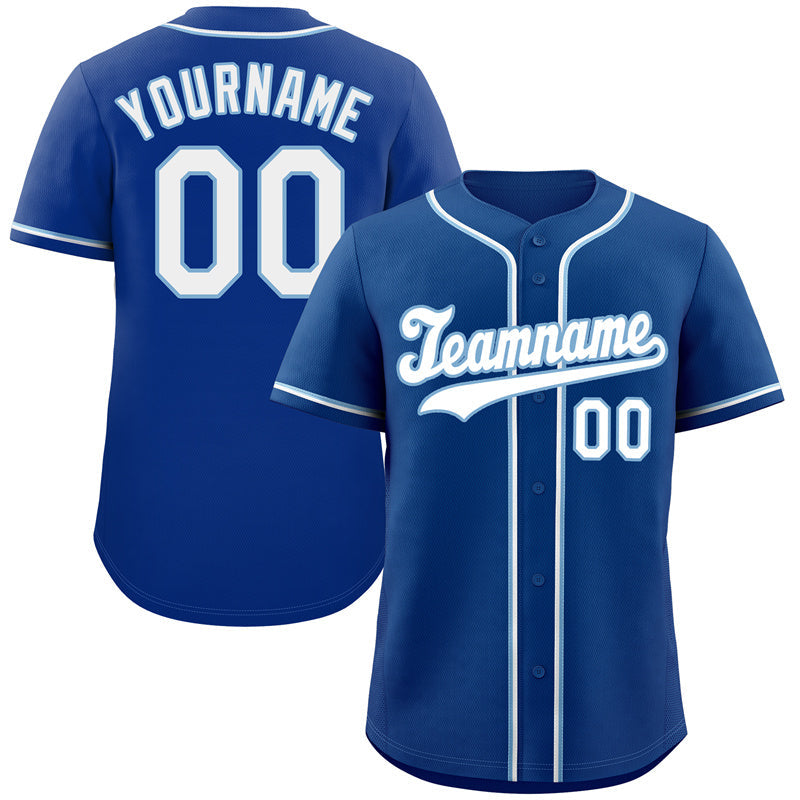
· Royal blue + white — clean, collegiate, versatile across design styles
· Cardinal + gray + white — slightly more distinctive, less common than navy-based palettes
If you're designing for a school team, you're probably starting with established school colors, which makes this decision easy. If you're building from scratch, the practical test is simple: can you read the name and number from thirty feet away? If yes, the contrast is probably working.
Choosing a Design Style
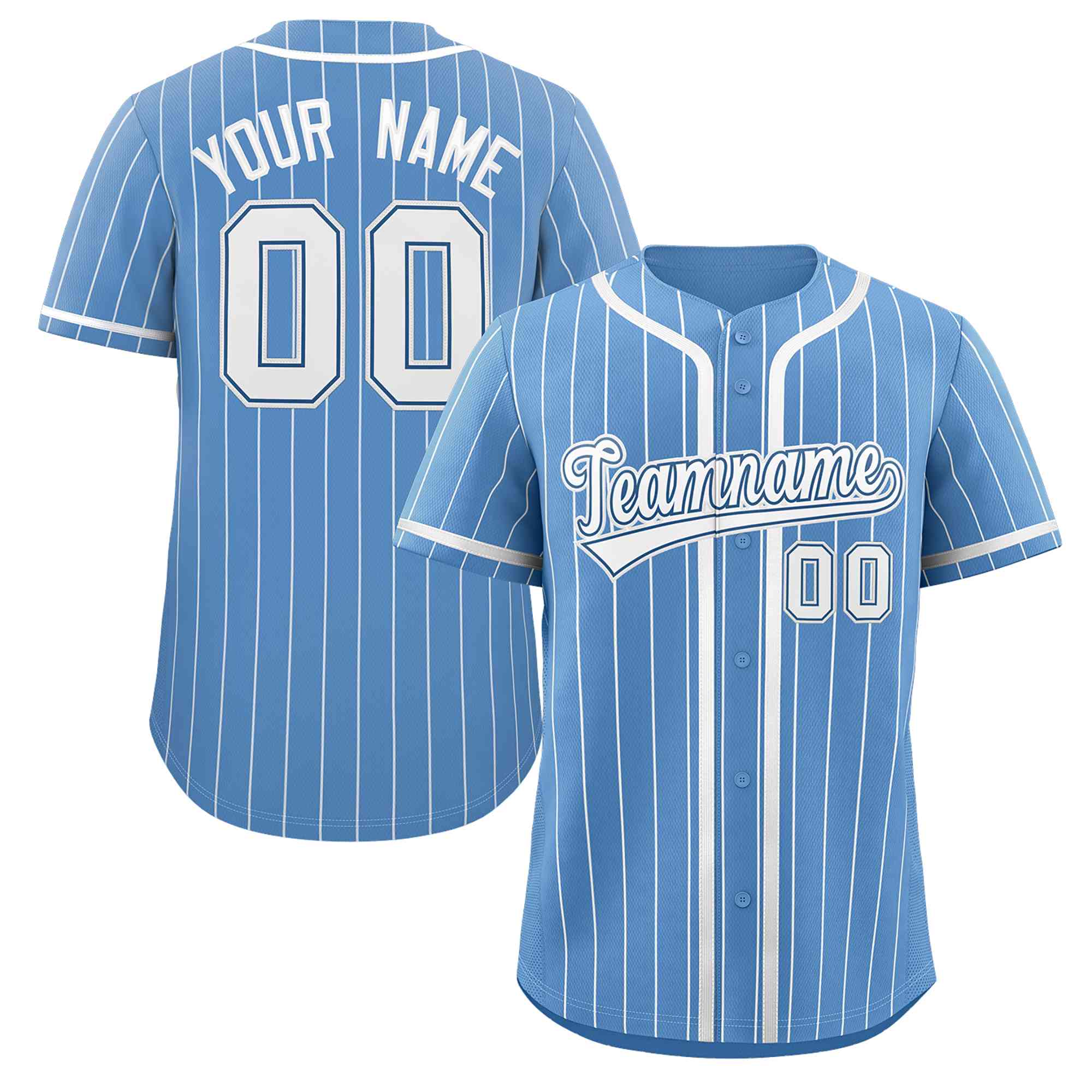
This is where custom design football jerseys start to diverge significantly in character. The same name and number combination looks completely different depending on the underlying design framework.
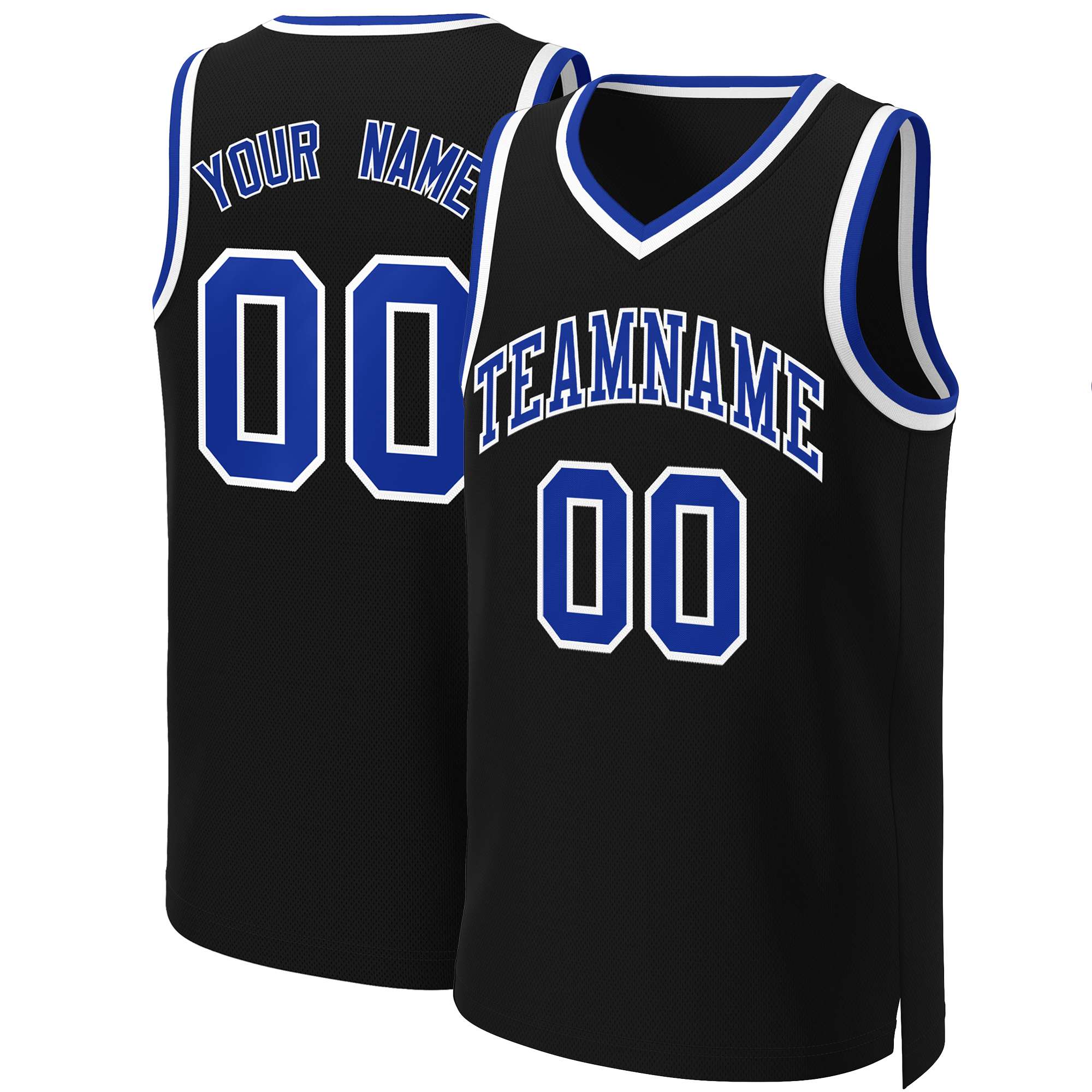
Classic Style is what most people picture when they think of a football jersey. Clean cut, minimal graphics, the visual weight sits entirely on the name and number. It's the default for a reason — it's legible, it's professional, and it doesn't age badly.
Gradient Fashion uses a color transition across the body of the jersey, usually moving from one team color to another. Done well, it's visually striking and modern. Done poorly, it reads as muddy from a distance. The key is ensuring the gradient doesn't interfere with number legibility — the number zone needs enough contrast to stay readable regardless of where it falls in the color transition.
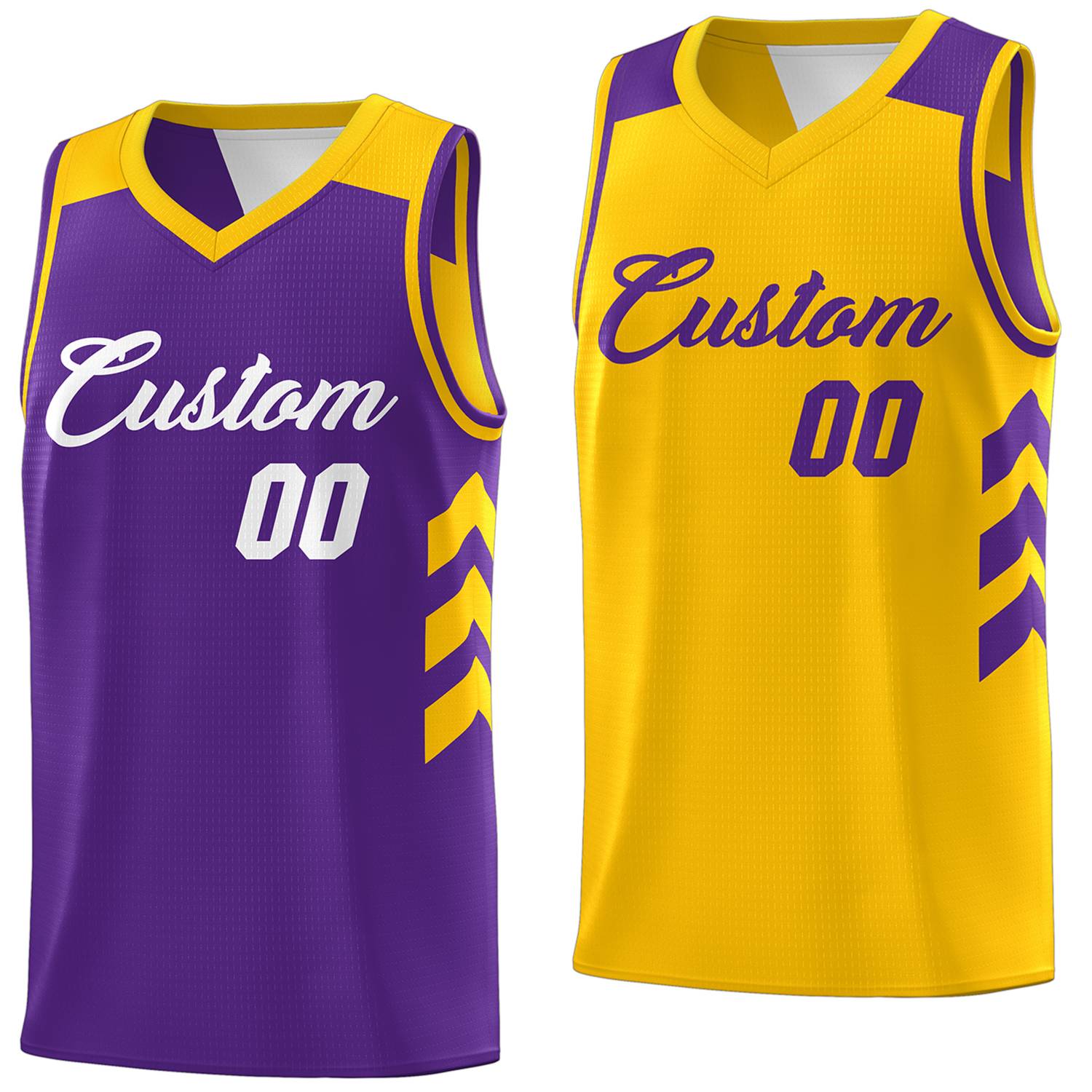
Color Block divides the jersey into distinct geometric zones, each in a different team color. It's a clean, contemporary look that has gotten increasingly popular at the high school and recreational level over the last few years.
Pattern-based designs — star patterns, camouflage, graffiti-inspired layouts — work well for tournaments and special events but can feel out of place in a regular season context. Know your audience before going this route.
The universal rule for custom design football jerseys: request a physical mockup before committing. Reputable suppliers will produce one at no cost. Colors render differently on screen than they do on fabric, especially mesh, and what looks sharp on a monitor can wash out under stadium lighting. The mockup step is not optional.
Step Three: Names, Numbers, and the Typography Decisions Nobody Warns You About
This is where people most underestimate the complexity of jersey customization.
Font Selection
Your jersey font is doing more work than you think. It needs to be legible at a distance, hold up on mesh fabric, and fit the overall design language of the jersey. Those three requirements are harder to satisfy simultaneously than they look.
Block fonts (thick, square letterforms with minimal variation in stroke width) are the most reliably legible on athletic jerseys. They read clearly from a distance, reproduce well in both stitched and printed formats, and have a traditional sporting authority to them.
Collegiate italic fonts add energy and forward movement to the design. They're a step more stylized than block fonts and work particularly well on classic-style jerseys.
Modern or decorative fonts look great in mockups and frequently disappoint on the final product. Thin strokes disappear at any distance. Letterforms with fine details don't survive the stitch-to-fabric translation. If you're committed to a stylized font, test it at small sizes in the mockup before approving.
Single-digit numbers (1 through 9) require a specific proportional treatment. A centered single digit on a standard number field looks visually undersized. Ask your design team how they handle this — experienced suppliers will know to adjust the scale and positioning.
Stitched vs. Printed
This is a technical distinction with real practical consequences.
Stitched lettering (also called tackle twill or sewn-on application) produces dimensional, textured text that stands off the fabric surface. It's the method used for professional and collegiate jerseys. It holds up through repeated washing with minimal degradation, and it reads as premium. The tradeoff is that it doesn't work well with color gradients or photographic-style graphics — stitching is inherently a solid-color medium.
Printed lettering (sublimation or heat transfer) can reproduce virtually any color combination or graphic detail. For custom design football jerseys featuring gradient text, complex logos, or multi-color number fills, printing is the only viable option. Modern sublimation printing, when done on quality fabric, produces results that are crack-resistant and colorfast through many wash cycles — the old reputation of printed jerseys as inferior to stitched ones is largely outdated for quality-tier products.
Many suppliers offer both options. The right choice depends on your design: use stitching for traditional, solid-color applications where the tactile quality matters; use printing for any design that involves color complexity.

Step Four: Fabric and Fit — the Part That Determines Whether You Actually Wear It
A jersey that looks perfect and fits wrong will stop being worn. This is physics, not preference.
Fabric Considerations
Football is an outdoor, high-intensity sport. The fabric requirements are non-negotiable: breathability, moisture management, and durability under physical contact.
Mesh construction — an open-weave fabric engineered for airflow — is the standard for football jerseys at every level for good reason. It keeps players cooler than solid-weave alternatives and dries faster. The weight of the mesh matters too: a heavier mesh (220-230 GSM range) has better structural integrity and holds stitched lettering more cleanly; lighter mesh (190-200 GSM) prioritizes breathability and freedom of movement.
Moisture-wicking treatments (often described as Pro-Wick or equivalent proprietary names) pull sweat away from the skin surface and accelerate evaporation. For summer practices and early-season games, this is not a luxury feature — it's the difference between being comfortable and being distracted by your own jersey.
Fit by Position and Use Case
Athletic fit (closer to the body, minimal excess fabric) reduces drag and tuck issues. It's the preferred fit for skill position players — quarterbacks, receivers, defensive backs — where speed and clean lines matter.
Relaxed fit allows a broader range of motion and accommodates shoulder pad clearance more comfortably for linemen and linebackers. For flag football, the relaxed fit is almost universally the better choice.
If you're ordering a team set, collect actual measurements rather than assumed sizes. The single most common bulk order problem is people guessing their size and ending up with jerseys that don't fit. A simple measurement template — chest circumference, jersey length preference — sent to each player ahead of the order will save you a round of exchanges.

Step Five: Group Orders — How to Not Let One Person Derail the Whole Process
Team orders are logistically simple in theory and operationally messy in practice. Here's the honest version of how to run them without losing your mind.
Lock the design before you open it to individual customization. Team name, colors, design style, fabric, fit cut — these decisions should be made by whoever is running the order, not by committee. The only individual inputs you need from each player are their name, number, and size. Opening design decisions to the whole group guarantees three weeks of debate and a compromise nobody loves.
Use a roster template. Most suppliers provide an Excel or CSV format for bulk orders. Fill in player name, number, size, and any specific notes in one document and submit it as a single file. This eliminates the error rate that comes from processing individual messages — misread numbers three and eight, names spelled differently in two different emails, and the one person who didn't respond until after you submitted.
Build in more lead time than you think you need. Custom production for a team set typically runs 10-15 business days, not including shipping. Order placement at the start of a season, before tryouts are finalized, is a common mistake that results in jerseys arriving two weeks into the schedule. Order from confirmed roster numbers, and add a week of buffer beyond the supplier's stated timeline.
The number change problem. Someone will want to change their number after you've submitted. Have a policy for this before it happens. Most suppliers will accommodate changes before production begins; after production starts, it's a reorder. Make the deadline clear upfront.
Getting a football jersey customized is genuinely not that complicated once you understand what you're deciding at each step. Most problems come from skipping the use-case question, skipping the mockup review, or trying to run a team order without a structured process.
If you're looking to order for a school team, a flag football league, or a group that wants matching jerseys done properly — KXK's school football jersey collection covers classic and gradient styles, stitched and printed name/number options, and bulk ordering with a design mockup before you commit. Before starting a custom project from scratch, it's a good idea to check out our products or feedback from existing customers.
Leave a comment
Comments will be approved before showing up.
Also in Football


Flag Football at the 2028 Olympics: Why This New Sport Is Growing Worldwide
June 29, 2026 5 min read
This comprehensive guide explains why flag football has become the fastest-growing football discipline worldwide, with a focus on its 2028 Olympic debut. It covers the sport's rules, safety benefits, youth participation surge (especially among girls), equipment needs, and the future trajectory of the sport in America and globally. The article targets U.S. parents, youth coaches, and athletes considering flag football participation.
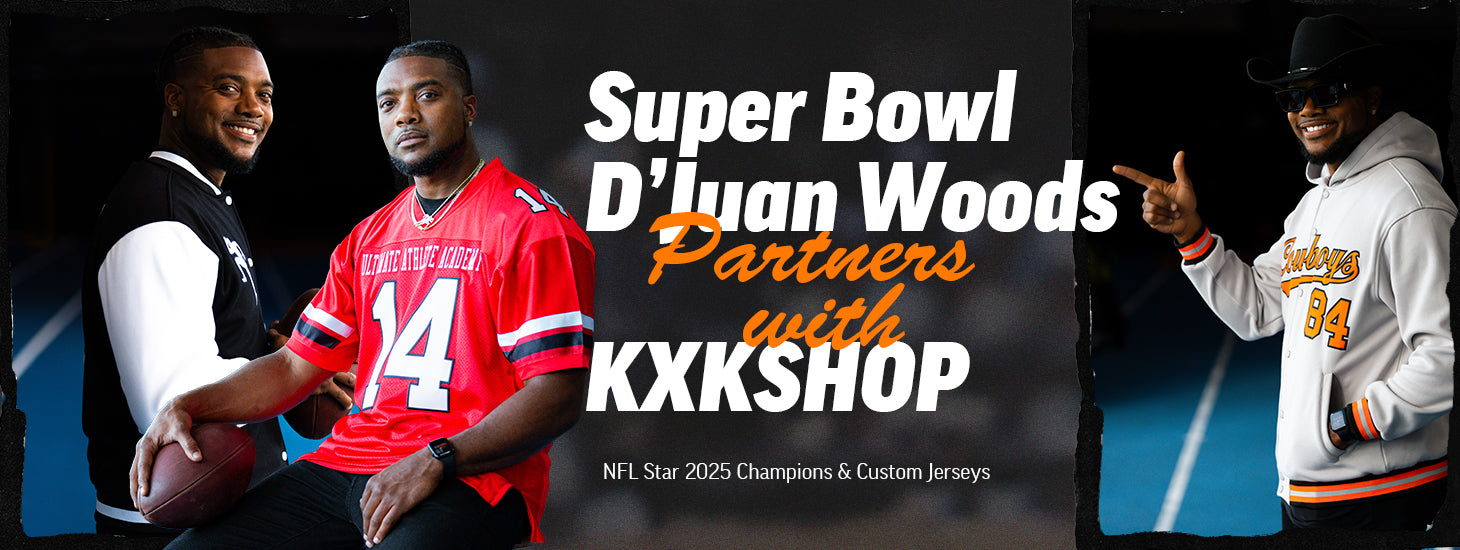

NFL Star D’Juan Woods Partners with KXKSHOP | Super Bowl 2025 Champions & Custom Jerseys
September 04, 2025 2 min read
🏈 Super Bowl Champion D’Juan Woods Joins Forces with KXKSHOP
KXKSHOP is proud to announce a special partnership with D’Juan Woods, former NFL wide receiver and Super Bowl Champion. Known for his work ethic, professionalism, and inspiring journey, Woods perfectly embodies the values that KXKSHOP delivers through every custom football jersey: quality, teamwork, and performance.


Why Is American Football So Popular? Understanding Its Phenomenal Rise
January 23, 2025 3 min read
Events like the NFL International Series introduce the sport to global audiences, expanding its fanbase and reinforcing its position as a dominant cultural force.
Recent Articles
- Flag Football at the 2028 Olympics: Why This New Sport Is Growing Worldwide
- How Do I Personalize a Football Jersey? A Complete Guide to Custom Football Jerseys
- NFL Star D’Juan Woods Partners with KXKSHOP | Super Bowl 2025 Champions & Custom Jerseys
- Why Is American Football So Popular? Understanding Its Phenomenal Rise
- How to Style a Football Jersey: Tips for Rocking Your Custom Look
Top Searches
 Ice Cream
Trending Now